


Yoruba Ancestry Explained: History, Culture, and Identity
June 17, 2026
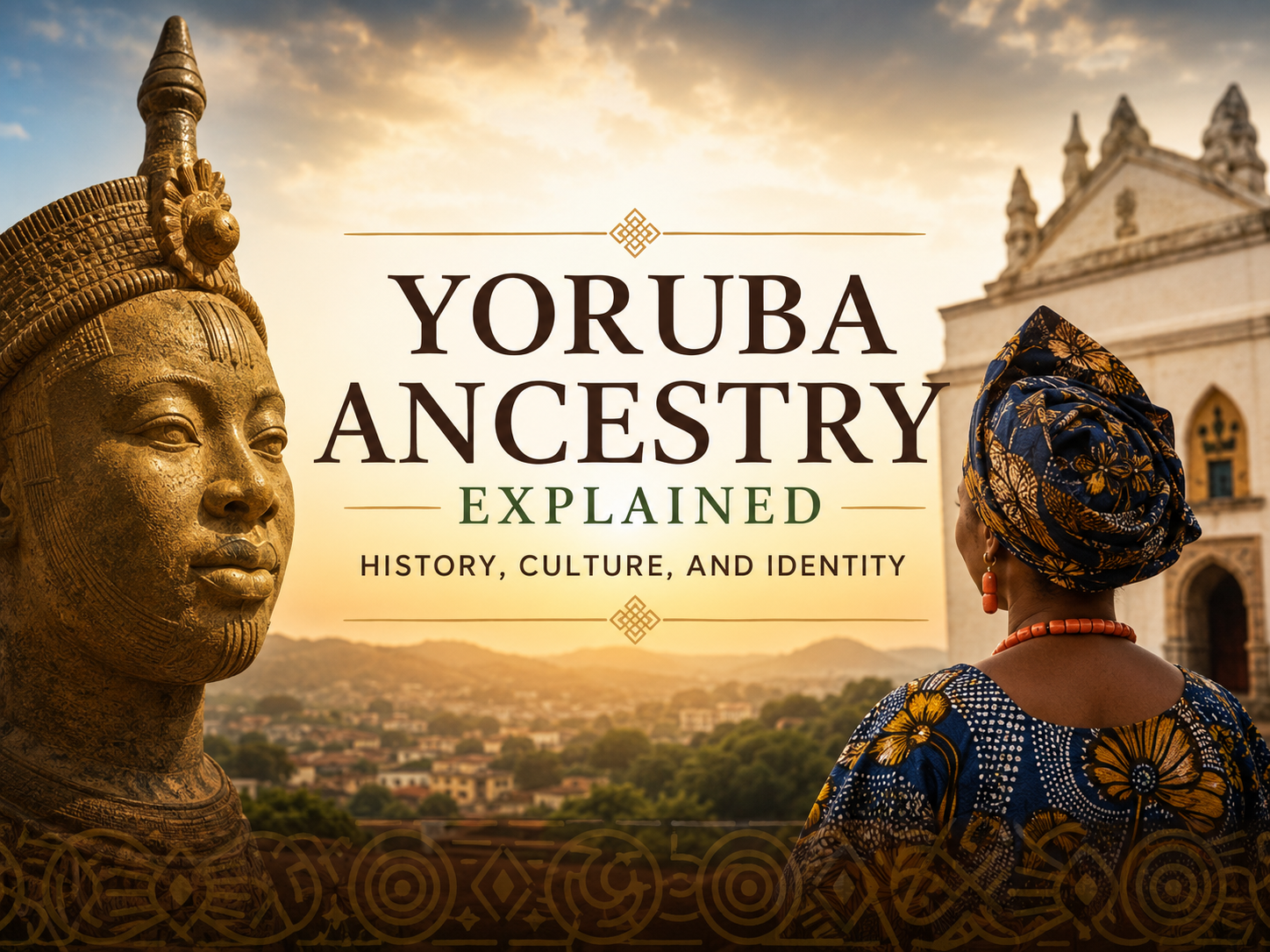
For generations, millions of African Americans knew they were African but were never told which people, which land, or which story belonged to them.
Over generations, many people of African descent lost direct knowledge of their ancestral communities, languages, and places of origin. Family stories became fragmented, records disappeared, and connections to specific African peoples faded from memory. Yet the desire to know where we come from has never disappeared.
Today, advances in DNA testing are helping many descendants of the African diaspora reconnect with pieces of that missing story.
One of the most common and significant ancestral connections discovered through DNA testing is to the Yoruba people of West Africa.
For many, discovering Yoruba ancestry is more than a genetic result. It is the beginning of a journey home.
Who Are the Yoruba People?
The Yoruba are one of Africa's largest and most influential ethnic groups, with more than 50 million people living primarily in southwestern Nigeria, as well as neighboring Benin and Togo.
For centuries, the Yoruba have been known for their sophisticated kingdoms, rich artistic traditions, spiritual systems, commerce, governance, and strong sense of community.
Today, Yoruba culture continues to influence millions of people around the world.
Major Yoruba cities include:
- Lagos
- Ibadan
- Abeokuta
- Ile-Ife
- Ijebu-Ode
- Oyo
- Ikorodu
The Yoruba language remains one of Africa's most widely spoken indigenous languages and serves as a living connection between the past and present.
Why Yoruba Ancestry Matters
For many African Americans, a Yoruba DNA result can be deeply emotional.
It may be the first time in their lives they can answer questions that previous generations could not:
- Who were my ancestors?
- What language did they speak?
- What traditions did they practice?
- What part of Africa did they come from?
- What people can I call my own?
For generations, these answers were hidden by history.
A Yoruba ancestry result does not tell the entire story, but it often provides the first tangible clue that allows descendants to begin rebuilding a connection that was interrupted centuries ago.
Many people describe the experience not as discovering something new, but as recovering something that always belonged to them.
The Ancient Origins of the Yoruba
The history of the Yoruba people stretches back centuries before European contact with West Africa.
At the heart of Yoruba civilization stands the ancient city of Ile-Ife, regarded by many Yoruba people as the spiritual and cultural birthplace of their civilization.
According to Yoruba tradition, Ile-Ife is where creation began and where humanity first emerged under divine guidance.
Whether viewed through the lens of history, culture, or spirituality, Ile-Ife remains one of the most important centers of Yoruba identity.
Today it continues to attract visitors, scholars, traditional rulers, and members of the African diaspora seeking to reconnect with their roots.
The Great Yoruba Kingdoms
Long before colonial rule, the Yoruba built thriving kingdoms known for governance, commerce, military strength, and cultural achievement.
Among the most prominent were:
- The Kingdom of Ife
- The Oyo Empire
- The Ijebu Kingdom
- The Egba Kingdom
- The Ondo Kingdom
- The Ekiti Kingdoms
The Oyo Empire became one of the most powerful states in West Africa, developing extensive trade networks and political institutions that rivaled many societies of the era.
These kingdoms demonstrate an important truth often overlooked in discussions of African history:
African civilizations were not waiting to be built. They were already thriving.
Yoruba Culture and Values
One reason many people feel such a strong connection after discovering Yoruba ancestry is that Yoruba culture places enormous importance on identity, family, and legacy.
Family and Lineage
In Yoruba culture, family extends beyond parents and children.
Identity is connected to ancestors, descendants, extended family, and community.
The actions of one generation are viewed as influencing future generations, creating a strong sense of responsibility and continuity.
Iwa Pele: Good Character
One of the most respected concepts in Yoruba culture is Iwa Pele, often translated as "good character."
A person's reputation is built not merely through wealth or status, but through integrity, humility, wisdom, and service to others.
The idea reflects a belief that true greatness begins with character.
Community
The Yoruba worldview emphasizes cooperation and collective responsibility.
Success is celebrated, but individuals are also expected to contribute to the wellbeing of the larger community.
The Meaning Behind Yoruba Names
Yoruba names are far more than labels.
They often tell stories, preserve history, and communicate blessings.
Examples include:
- Adewale — "The crown has come home."
- Babatunde — "Father has returned."
- Yetunde — "Mother has returned."
- Olufemi — "God loves me."
- Oluwasegun — "God has been victorious."
For many descendants of the diaspora, receiving or learning a Yoruba name can become a powerful expression of cultural reconnection.
Yoruba Spiritual Traditions
The Yoruba spiritual tradition is one of the oldest continuously practiced belief systems in the world.
Historically, Yoruba spirituality recognized:
- Olodumare, the Supreme Creator
- The Orisha, divine manifestations and forces of nature
- Ancestor reverence
- Sacred ceremonies and festivals
- Divination traditions
As Yoruba people were dispersed throughout the Americas, many aspects of these traditions survived.
Their influence can still be seen today in:
- Santería in Cuba
- Candomblé in Brazil
- Lucumí traditions
- Trinidad Orisha practices
Despite centuries of separation, elements of Yoruba culture continued to survive across oceans and generations.
The Yoruba and the African Diaspora
During the transatlantic slave trade, large numbers of Yoruba people were forcibly taken from West Africa.
Many descendants of those individuals now live throughout:
- The United States
- Brazil
- Cuba
- Jamaica
- Trinidad and Tobago
- Haiti
- Other parts of the Caribbean and Latin America
Although names, languages, and family records were often lost, cultural memory survived in remarkable ways.
Music, spirituality, oral traditions, food, and community values carried fragments of ancestral knowledge forward through generations.
Today, DNA testing is helping descendants reconnect those fragments to a specific people and place.
Yoruba Ancestry Is More Than DNA
For many people, discovering Yoruba ancestry begins with a DNA test.
But the journey rarely ends there.
Some choose to study Yoruba history.
Others begin learning the language.
Many travel to Nigeria for the first time.
Some build relationships with living relatives and communities connected to their ancestral homeland.
What begins as a scientific discovery often becomes something much deeper.
It becomes a rediscovery of identity.
A rediscovery of belonging.
A rediscovery of heritage.
Reconnecting to Your Yoruba Roots
Every person's journey is different.
For some, reconnecting means learning family history.
For others, it means visiting ancestral lands, participating in cultural ceremonies, or building relationships with communities in Africa.
The important thing is recognizing that ancestry is not simply about the past.
It is also about the future.
Understanding where you come from can help shape where you are going.
The Journey Home
For centuries, millions of descendants of the African diaspora carried questions that history could not answer.
Who were we before slavery?
What people did we come from?
What traditions were lost?
Today, many are beginning to find answers.
Discovering Yoruba ancestry does not erase the pain of history, but it can help restore a connection that generations fought to preserve.
For many, that discovery becomes more than genealogy.
It becomes a homecoming.
Because knowing your ancestry is not simply about learning where your story started.
It is about reclaiming the right to continue it.
Begin Your Journey
At Tribal Tapestry, we believe ancestry should be more than a percentage on a DNA report.
Our mission is to help members of the African diaspora reconnect with their ancestral heritage, cultural identity, and living connections across Africa.
Your DNA may reveal where your ancestors came from.
The journey that follows can help you discover who you are.